Where your drawings end, our system begins — and your client never feels the seam.
The handoff from architect to builder is where most luxury projects quietly lose fidelity. This page is about what happens on the other side of that line.
Your name goes on the house. Every referral is a reputation decision.
You've spent a career producing drawings that hold up under scrutiny. The harder part is what happens after the drawings leave your hands — whether the builder protects what you drew, whether the client is held through the unspecified zone of finishes, whether the project goes quiet for weeks and you get pulled back in to babysit something you thought you'd handed off.
The question isn't whether a builder is competent. It's whether their system is aligned enough with yours that a referral doesn't expose you. This page exists to answer that question in about three minutes.
Between drawings and dwelling, there is a phase most architects don't want to own.
Finishes. Fixtures. Paint sheen. Hardware. Millwork detailing. Tile. Cabinet pulls. A thousand small decisions that sit between the elevation and the final built reality — decisions that can either protect your design or erode it by a thousand small cuts.
Most builders treat this phase as a negotiation with the client. We treat it as a translation of the architect. The intent of the drawings carries forward through a structured, AI-assisted process that captures the client's taste in a language consistent with your design — not competing with it, not rewriting it, not flattening it.
We are not a replacement for the architect. We are the continuation.
You draw the house. We hold the client through finish, build, and turnover — so the home that gets lived in is the home you drew.
A walkthrough of the handoff — from your perspective and your client's.
Toggle between views. The architect track shows what's visible to you at each stage. The client track shows what they're experiencing on our side of the seam.
Drawings received
We receive and review the complete architectural set — plans, elevations, sections, and any specifications. A one-page acknowledgement goes back to you naming what we have, what we flag for coordination, and a single point of contact.
A calendar invite for their Vision Board kickoff, a short primer on what to expect, and a direct introduction to the design lead assigned to their project.
The proprietary intake that keeps finish-level intent translatable, not negotiable.
Clients upload one to three reference photos per room. Our AI produces a structured analysis, asks the right follow-up questions, and delivers a summary to the design team in language consistent with the architectural intent — not a wishlist, a specification.
Your design, made legible to the client before a single footer is poured.
Two tools clients rarely see elsewhere — both designed to protect the architect's intent by making it real. In context. And in hand.
The house on the actual land.
From raw parcel, through the architectural 3D render, to an AI composite of the home placed onto the client's real property. The client approves the design in its real context — proportion, orientation, siting — before ground is broken.

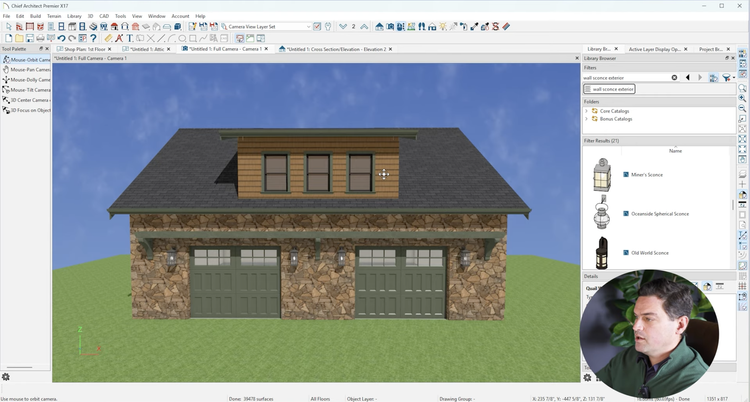
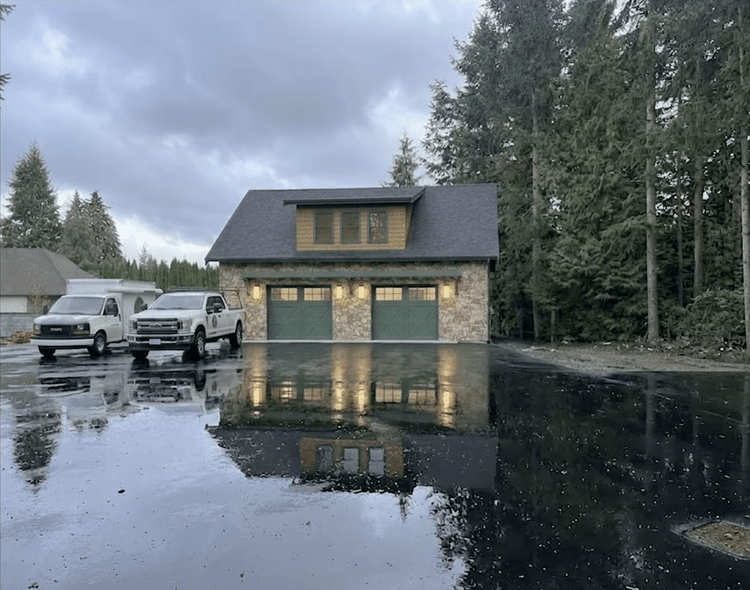
The house in their hands.
A scale 3D-printed model of the home, produced from the drawings by Chris and the Williams Contracting team. Something the client keeps — a moment they will associate, accurately, with the referral that started it.

You stay out of babysitting mode. Held by commitment, not by hope.
A project is only as trustworthy as its rhythm. These are the four commitments that keep architects from having to chase us — and from having to field client questions we should have answered first.

A written update every Friday.
Until turnover. What advanced, what is next, what needed a decision. Short. Specific. Archivable.
Milestones flagged to you first.
Before the client sees them. If something affects the drawings, you hear about it before your client does.
A direct line to Chris.
Not a general inbox. Not a project coordinator three layers deep. The builder whose name is on the company.
Variance surfaced, never buried.
Any deviation from plan — material, finish, schedule — is named to you as it emerges. No post-hoc discoveries.
From handoff anxiety to handoff confidence.
The decision on the table is a small one. We are not asking you to switch builders. We are asking you to see the system once — one conversation, one walkthrough of how a client would travel through it — and decide whether it is the kind of continuation your drawings deserve.
Nothing about this is urgent. The right projects, the right clients, and the right architects arrive on their own schedule. This page will still be here when one of yours does.
When it happens, the seam will be ready.